
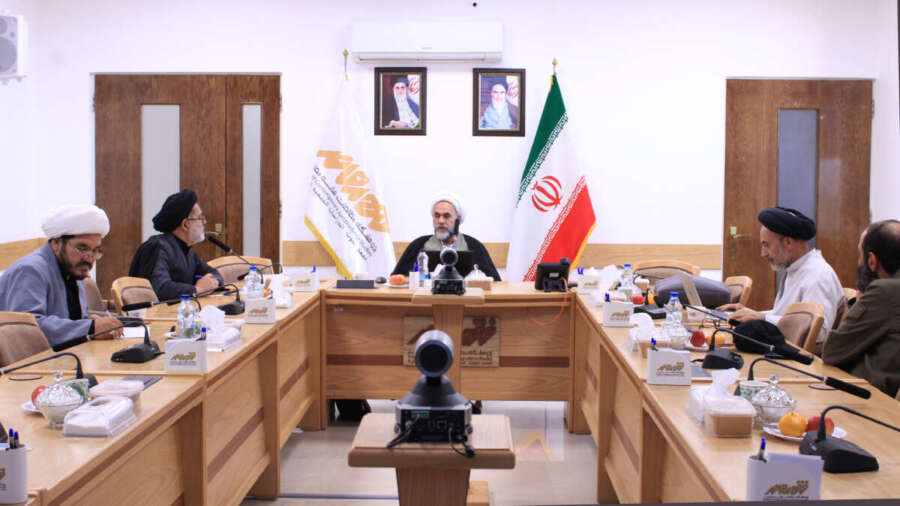
Holding a Jurisprudential Session on Examining Surface Water Ownership

In the scholarly session of the Research Institute of Contemporary Jurisprudence Studies, Hujjat al-Islam wal-Muslimeen Dr. Borji, by examining related narrations, considered the famous view on the commonality of waters lacking backing and evaluated their ownership in the realm of anfal and Islamic government.

In the scholarly session of the Natural Resources and Environment Jurisprudence Group titled “Surface Waters Ownership in Islamic Jurisprudence,” Hujjat al-Islam wal-Muslimeen Dr. Borji, while examining narrations related to water and anfal, emphasized that based on valid verses and narrations, the real ownership of natural resources and public waters belongs to God and is placed at the disposal of the Imam and Islamic government.
🔹He considered narrations related to the commonality of waters weak in terms of document and said based on anfal evidence, the Islamic government has the right to manage and allocate these resources and exploitation of these resources must be done within the framework of public interests and under the jurisprudential supervision of the Islamic government to prevent wasting the rights of future generations.
View the full text of the scholarly session news:🔻

Mostafa Dorri

Jurisprudence of Governance in Cyberspace/34

Cyberspace still seemed a newly emerged and novel topic when artificial intelligence arrived and changed all calculations and methods of governance.
🔹It is clear that governing a space that always had to be manually and individually explored is very different from governing a space that with one “prompt,” not only provides comprehensive information from all virtual pages but also their analysis.
🏷Governance of cyberspace is a concept broader than legislation and setting punishments for illegal behaviors. Governance includes both legislation and policy-making as well as implementation and supervision of laws. Governance even includes methods that guide the user toward acting according to a policy and approach without a law being enacted or a punishment considered for violating it.
View the full text of the editorial:🔻

In the scholarly session of the Jurisprudence of Politics and International Relations Group of the Research Institute of Contemporary Jurisprudence Studies, it was critiqued and examined:

In this session, Dr. Haqiqat, while explaining jurisprudential views on the prohibition or permissibility of nuclear weapons, considered separating three levels of construction, stockpiling, and use necessary and emphasized the absolute prohibition of using weapons of mass destruction against civilians.
At the same time, by proposing a distinction between weapons of mass destruction and tactical nuclear weapons, he raised the possibility of difference in jurisprudential ruling in limited and military cases. The scholarly critics, while emphasizing the necessity of precise topic recognition and evaluating environmental consequences, called for deeper examination of the foundations of philosophy of law and ethics in inferring rulings on this issue.
View the full text of the session news: