Three Quranic Foundations of Convergence: From Common Creation to Faith-Based Unity
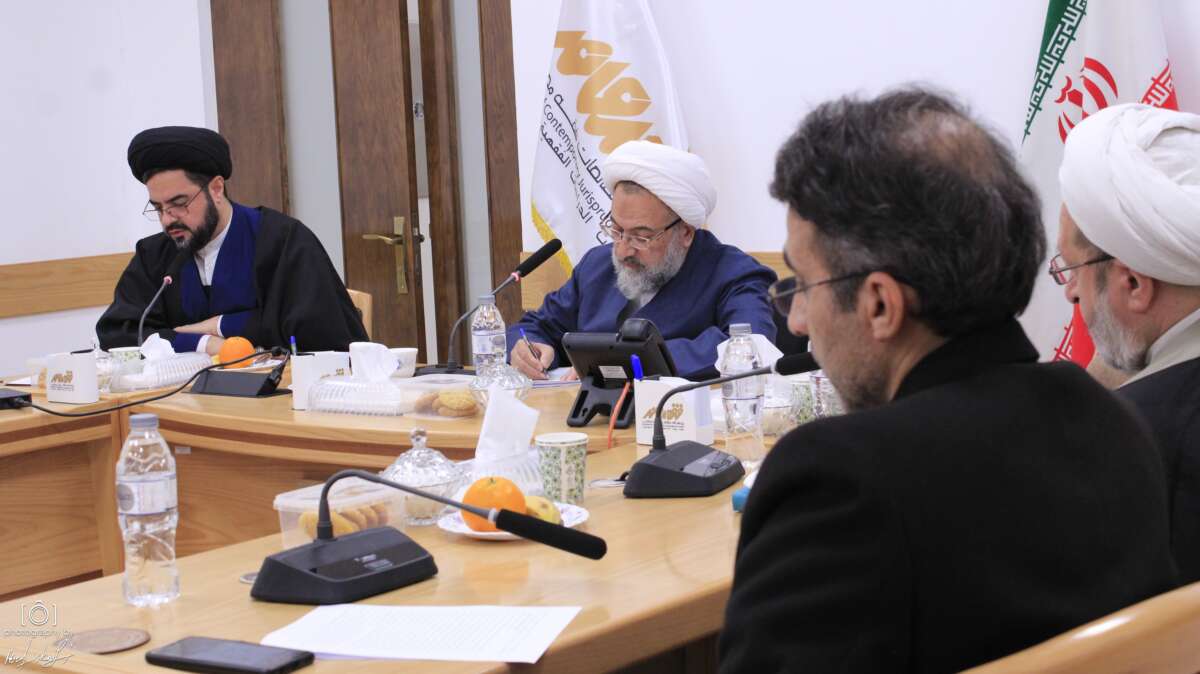
According to the Site of the Research Institute for Contemporary Jurisprudence Studies, a scientific session titled “The Foundations of Convergence and Its Resultant Legal Consequences in the Holy Quran” was held as a pre-conference session for the 15th Conference on the Islamic-Iranian Pattern of Progress. This session was organized through the joint cooperation of the “Think Tank of Jurisprudence and Islamic Law” and the “Research Institute for Contemporary Jurisprudence Studies” on Wednesday, January 6th, at the meeting hall of the Research Institute for Contemporary Jurisprudence Studies in Qom.
In this scientific session, Ayatollah Alidoust, Head of the Think Tank of Jurisprudence and Islamic Law, and Dr. Seyyed Abolghasem Naghibi, faculty member and researcher in the field of Islamic Jurisprudence and Law, delivered speeches. The scientific secretary of the session, Hujjat al-Islam wal-Muslimeen Seyyed Alireza Hosseini, Secretary of the Think Tank of Jurisprudence and Islamic Law, while welcoming the present professors and researchers, explained the objectives of this session within the framework of the scientific discourse of the 15th Conference on the Islamic-Iranian Pattern of Progress, centered on “Convergence and Progress.”
At the beginning of the session, Hujjat al-Islam wal-Muslimeen Seyyed Alireza Hosseini, the scientific secretary, stating that the theme of the 15th Conference is “Convergence and Progress,” remarked: “There is a reciprocal relationship between convergence and progress; cultural and social convergence pave the way for progress, and progress leads to the strengthening of collective convergence.”
Continuing the session, Dr. Seyyed Abolghasem Naghibi, professor at Shahid Motahari University, as the presenter, emphasized two fundamental Quranic principles for achieving convergence at the human and monotheistic levels.
He considered the concept of “Common Creation” to be the first and most extensive foundation of convergence in the Quranic system and, citing the noble verse “He created you from a single soul” (khalaqakum min nafsin wahidah) and emphasizing the common human essence and divine nature (Fitrah), clarified that this commonality is rooted in the formation of collective identity and, consequently, is the source of fundamental rights of citizens such as the right to life and intrinsic human dignity. This perspective provides the basis for equal citizenship rights regardless of religion or race.
The professor of Shahid Motahari University also referred to the “Word of Monotheism” (Kalimah al-Tawhid) as the basis for convergence among the monotheists of the world and, citing the verse “Come to a word that is equitable between us and you” (Ta’alaw ila kalimatin sawa’in baynana wa baynakum), stated that this “Equitable Word” (Kalimah Sawa’) plays a pivotal role in unifying and creating convergence among the followers of divine religions, and many rights recognized for the People of the Book (Ahl al-Kitab) are rooted in the acceptance of this intellectual component.
In his belief, common creation for general human convergence and the word of monotheism for specific monotheistic convergence pave the way for legal and social progress in society.
Dr. Naghibi, continuing his discussions regarding convergence in the Quran, categorized the component of solidarity among Muslims under the title of “Islamic Faith.” He emphasized: “The Holy Quran has utilized fundamental terms to describe this faith-based solidarity, each carrying specific semantic weight in the social and legal domains.”
According to the professor of Shahid Motahari University, to explain this bond, the Quran cites terms such as “Brotherhood” (Ukhuwwah) (based on the verse “The believers are but brothers” – Innama al-mu’minuna ikhwah), “Mercy” (Rahmah) which is the characteristic of believers in interacting with each other (based on the verse “Merciful among themselves” – Ruhama’u baynahum), and “Guardianship/Friendship” (Wilayah) (“Some of them are allies of one another” – Ba’duhum awliya’u ba’d). Also, the concept of “Intimacy” (Ulfah) and “Accompaniment” (Ma’iyyah) indicates the depth of this inner bond.
He analyzed this set of convergence components within the framework of the “Way of the Believers” (Sabil al-Mu’minin) recognized in the Quran (such as the verse “And whoever opposes the Messenger… and follows other than the way of the believers” – Wa man yushaqiq al-Rasul… wa yattabi’ ghayra sabil al-mu’minin). Dr. Naghibi stated that this faithful lifestyle, in addition to moral “oughts” such as self-sacrifice (Ithar) and cooperation, entails legal requirements that form the foundation of the Islamic legal system based on the solidarity of believers.
In addition to these Quranic cases, Dr. Naghibi made a passing reference to another important foundation and called it “Territorial Convergence.”
The professor of Shahid Motahari University addressed the pivotal importance of “Territorial or National Convergence” as the third fundamental pillar of convergence and presented Quranic documentation for this deep human attachment to the homeland.
He emphasized that the Holy Quran recognizes a type of “Natural Proprietary Attachment” to the land in which a person has lived and was born. Citing the use of possessive genitive constructions (Tarkib-e Ezafi-ye Ekhtisasi-ye Maleki) in the verses, he considered this attachment as an undeniable matter in the Word of Revelation.
As an example, Dr. Naghibi referred to the verse “And how many a city was stronger than your city which expelled you” (Wa ka-ayyin min qaryatin hiya ashaddu quwwatan min qaryatika allati akhrajatka) and explained that the use of the construction “Your City” (Qaryatika) indicates an exclusive relationship and a type of specific joint ownership regarding the land. Also, the words of the disbelievers in the verse “We will surely drive you out of our land” (La-nukhrijannakum min ardina) imply an implicit recognition of this proprietary attachment.
He added that the importance of this attachment is such that the Holy Quran has made unjust expulsion from one’s home a cause for issuing permission for legitimate defense and fighting (“Those who have been expelled from their homes without right” – Alladhina ukhriju min diyarihim bighayri haqq).
In conclusion, Dr. Naghibi referred to the famous hadith “Love of the homeland is from faith” (Hubb al-watan min al-iman) and stated that the combination of faith with attachment to land and people creates a blessed identity. Citing the words of Amir al-Mu’minin (PBUH) that “By the love of homelands, countries are developed” (Umirat al-buldan bi-hubb al-awtan), he concluded that this patriotism and deep attachment are considered the main source of progress and territorial development of societies.
Continuing the session, Ayatollah Abolghasem Alidoust, Professor of the Advanced Course (Dars-e Kharej) of Jurisprudence and Principles at the Qom Seminary, while appreciating the presented content, proceeded to critique the raised points and reminded: Entering the discussion of legal effects and Shari’a rulings requires high precision, because legal deduction must be based on the appearance of transmission (Zuhur-e Naql) or the certainty of reason (Qat’-e Aql), and one cannot arrive at legal results based on a general claim.
He referred to an example from Dr. Naghibi’s note: That the common religious belief of monotheism is the basis for the convergence of followers of heavenly religions and the recognition of their citizenship rights and personal status in Islamic society.
Ayatollah Alidoust noted: If the commonality of the religious belief of monotheism is the basis for the convergence of followers of heavenly religions and the recognition of their citizenship rights in Islamic society, can this belief in monotheism be considered a document for recognizing citizenship rights and personal status?
He emphasized that when the discussion reaches legal results, one must act within the framework of disciplined jurisprudence and systematic jurisprudence, even if the view towards evidences is an expansive one.
In his opinion, cases like this citation are seen frequently in the presented text, and it is necessary for the final presentation that the transmitted or rational reasons and documentation for these legal correlations be explained more clearly.
Expressing ambiguity in citing Quranic verses (such as “Their homes” – Diyarihim) to define citizenship rights based on the land of birth, referring to the political borders of countries, he said: This approach stands in contrast to the jurisprudential framework of Dar al-Islam (Abode of Islam) and Dar al-Kufr (Abode of Disbelief), and applying legal burden (such as Anfal or citizenship) based on geographical borders requires a more precise explanation of the transmitted or rational correlation.
Ayatollah Alidoust, addressing the arrangement and order of propositions, pointed to another critique and added: Listing the fundamental rights of convergence (such as intrinsic dignity, life, and equality) requires “Demonstration” (Burhan) to specify why these items have appeared in the text in this exact order and number, and what logical order governs this list.
In the final part of the session, a Q&A session was held, and the presenter responded to the questions, views, and scientific ambiguities of the attendees.
This scientific session, emphasizing the Quranic foundations of human, monotheistic, and territorial convergence, examined the link between moral, social, and legal concepts within the framework of Quranic thought. The speakers, by explaining the various dimensions of this convergence, considered it the foundation for the formation of legal and social systems based on justice, consensus, and progress. The discussed topics and views opened new horizons regarding the relationship between jurisprudence, law, and Quranic foundations, which can pave the way for deeper research in the field of “Jurisprudence of Convergence.”