Ayatollah Sayyid Mujtaba Nourmofidi: The Era of Occultation is an Age of Perplexity and a Trial of Discerning Priorities
Lapses in Identifying Priorities: The Most Costly Errors of the Elite
Avoiding “Discernment Perplexity”: Ayatollah Nourmofidi’s Key Paradigm for Navigating the Occultation
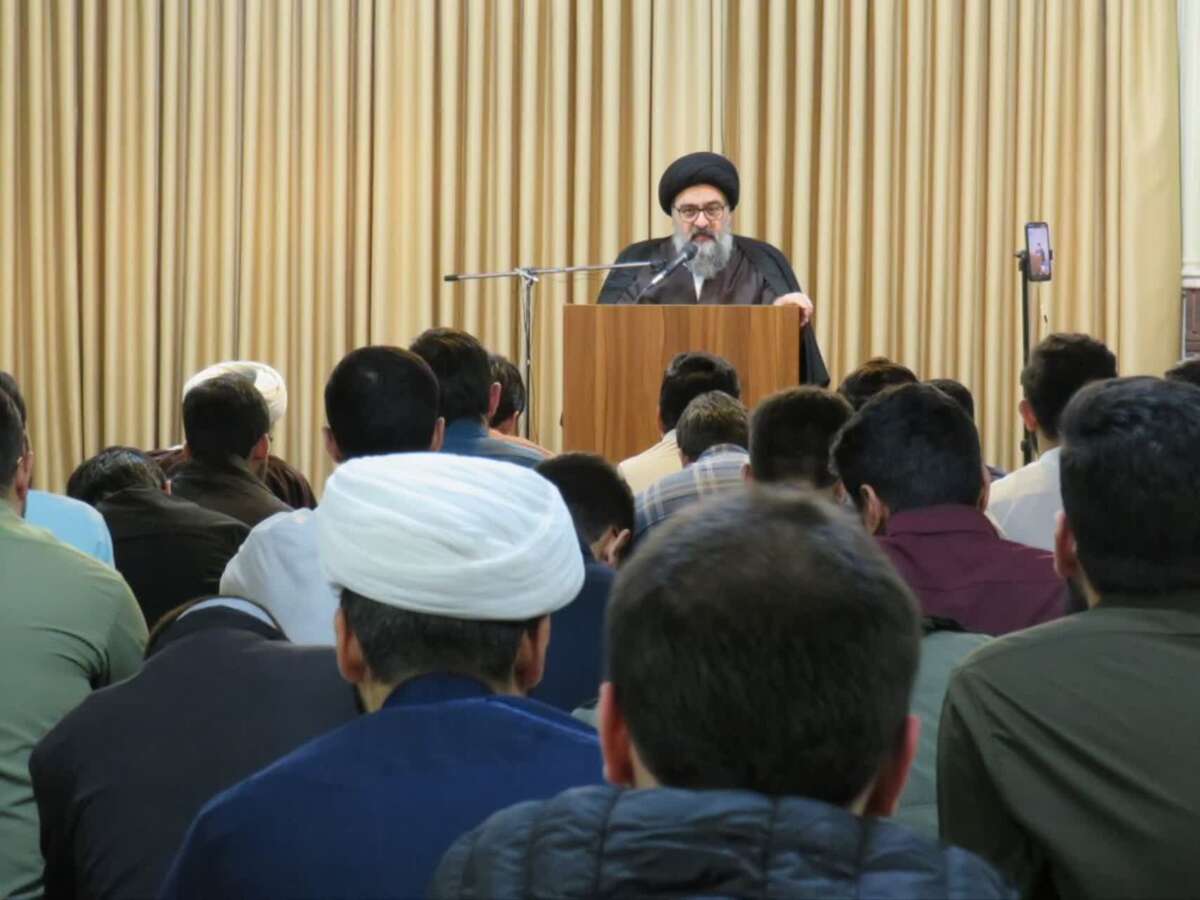
According to the Site of the Research Institute for Contemporary Jurisprudence Studies, Ayatollah Sayyid Mujtaba Nourmofidi, Professor of Advanced Studies (Dars-e Kharij) at the Qom Seminary and Head of the Research Institute for Contemporary Jurisprudence Studies, addressed a gathering of distinguished scholars and seminary students. On the occasion of Mid-Sha’ban (February 2025), he elucidated the sublime station of the Imam of the Age (aj), the culture of Intizar (expectation), and the multifaceted hazards characterizing the Era of Occultation.
In his opening remarks, Ayatollah Nourmofidi expressed his hope that assemblies dedicated to the remembrance of the Ahl al-Bayt (as), the dissemination of their profound teachings, and specific devotion to the sacred person of Hazrat Baqiyatallah al-A’zam (aj) would remain the cornerstone of all religious and academic endeavors during this period.
Highlighting the virtues of the night of Mid-Sha’ban, he characterized it as the most meritorious night following the Night of Qadr. “Traditions affirm that no supplicant is left unanswered on this night,” he stated. “Thus, we must utilize this occasion to pray for the resolution of the Islamic Ummah’s crises, the hardships of the people, and the repulsion of external threats. Above all, we must seek the pleasure and grace of Hazrat Wali-e Asr (aj), as true success and guidance are inextricably linked to a genuine connection with that sacred presence.”
The Head of the Research Institute for Contemporary Jurisprudence Studies identified “perplexity” (Hayrat) as the defining feature of the Occultation. He noted: “From the Holy Prophet (s) to Imam Hassan al-Askari (as), the Ahl al-Bayt (as) have repeatedly warned that the Occultation is an era of profound confusion—a time when only those safeguarded by Divine protection will persevere on the path of Truth.”
Ayatollah Nourmofidi emphasized that such perplexity is not confined to the general public. “Some of the most perilous lapses occur within the ranks of the Elite (Khawass). If those who identify as the soldiers of the Imam (aj) falter in discerning priorities, the consequences will be devastating for both themselves and the broader society.”
Invoking a Prophetic tradition, the Professor of Advanced Studies drew a parallel between the destiny of the Islamic Ummah and the Israelites (Bani Israel), quoting the Prophet (s): “The same tribulations that befell the Israelites shall be mirrored in my Ummah.”
He elaborated that this resemblance manifests significantly in the phenomenon of Occultation and perplexity. “Just as the Israelites succumbed to confusion during Prophet Musa’s (as) absence—specifically during the ten days added to the initial term for which they were unprepared—the Islamic Ummah faces similar monumental trials during this long Occultation.”
Discussing Prophet Musa’s (as) ascent to Mount Tor, he clarified: “The absence of Musa (as) for those unexpected ten days created a vacuum that led to widespread bewilderment, allowing the masses to be led astray. Such perplexity provides the ideal breeding ground for deviation and exploitation by malevolent actors.”
Referring to the historical account of Hasan Basri, he cautioned: “In the contemporary era, any alluring yet deceptive discourse that obfuscates the boundary between truth and falsehood poses the greatest threat to the faith of nations.”
Ayatollah Nourmofidi asserted that the primary mission of the Seminary is the precise elucidation of Mahdaviat and the culture of Intizar. He identified “vision-centrism” (the obsession with physical meetings with the Imam) as a critical pathology of this era. “We have no religious mandate to pursue a physical meeting with the Imam (aj) during the Occultation. Elevating this to a core tenet of faith invites fraudulent and deviant claims. Traditions explicitly state that anyone claiming such a meeting must be refuted. This obsession has misled many and caused even some seminary students to stumble.”
The Ayatollah further noted that skepticism regarding the utility of religious scholarship is a hallmark of ‘elite perplexity.’ “When a student questions the value of their studies, they are experiencing the specific confusion of this era,” he remarked. “Lapses are not limited to overt sins; for many scholars, the failure lies in losing sight of priorities. Discerning these priorities must be rooted strictly in the ultimate interests of Islam and the Muslim community.”
In a candid assessment, he described the inability to achieve religious self-awareness as a deep manifestation of this perplexity: “If we fail to recognize our station in the existential order, fail to comprehend religion accurately, or ignore the genuine needs of the people, we are in a state of Hayrat. Such negligence is not merely personal; when religion’s relationship with society remains unclarified, even seemingly pious activities can deviate from their core objectives.”
Citing the legacy of Martyr Mortaza Motahhari, the Head of the Research Institute for Contemporary Jurisprudence Studies observed: “Despite his academic eminence, Martyr Motahhari viewed social and intellectual engagement as a religious duty. He confronted deviations with erudition, patience, and intellectual breadth—a path that ensured his enduring impact and culminated in his martyrdom.”
On the subject of “enemy-recognition,” he warned: “Identifying the adversary is a serious matter. Oversimplifying the enemy’s tactics or neglecting their conspiracies is a dangerous form of perplexity. One cannot claim to be a scholar while remaining indifferent to social issues and the needs of the populace.”
In conclusion, Ayatollah Nourmofidi underscored the necessity of a paternal relationship between scholars and the public. “Our stance toward the people should be that of a father toward his children, characterized by inclusion rather than exclusion. Regardless of their level of religiosity, the people are the spiritual children of the Ulama, and our response to their errors must be one of compassion and sincere guidance.”
He concluded with a prayer that through the correct identification of duties and priorities, the religious community might emerge from perplexity and remain under the special providence of Hazrat Wali-e Asr (aj).