Ayatollah Nurmufidi: Assessment of the Islamic Revolution Should Not Be Reduced to Everyday Problems
The Revival of Religion in the Public Sphere is Among the Civilizational Achievements of the Islamic Revolution
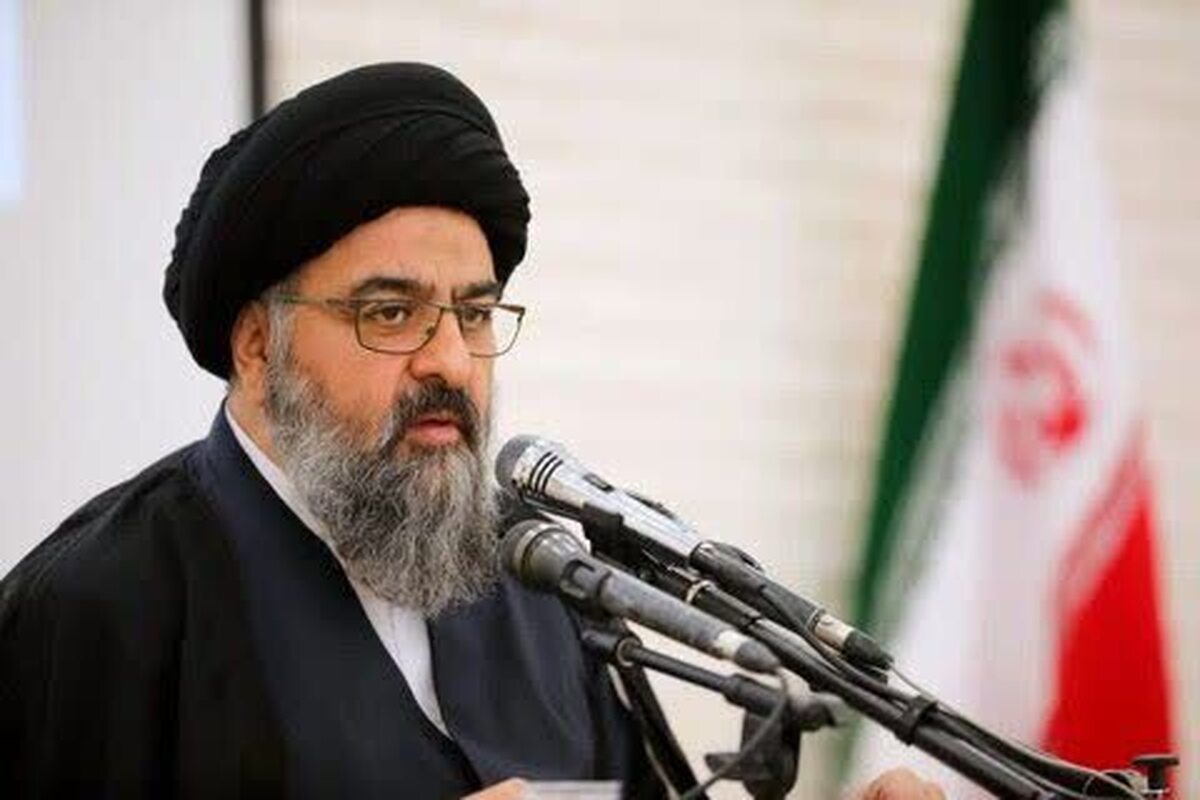
Ayatollah Sayyid Mujtaba Nurmufidi: The February 11 march, as a complement to the January 12 march, will play a fundamental role in neutralizing the final links of the enemy’s actions and will serve to deter them from certain dangerous measures. On the eve of the half-century mark since the victory of the Islamic Revolution, Ayatollah Sayyid Mujtaba Nurmufidi, professor of Dars-e Kharij at the Qom Seminary and President of the Research Institute for Contemporary Jurisprudence Studies, in remarks during his Dars-e Kharij, explained the most important achievements of the Islamic Revolution and emphasized: “The level of investigating the Revolution should not be downgraded to the extent of certain complications and problems of everyday life; for it is an entirely different matter.” Stating that speaking of the Revolution’s achievements requires a strategic and historical perspective, he clarified: “If we wish to express the achievements of the Revolution with a strategic view, we must address them by observing the historical trajectory of Shīʿī jurisprudence and the past it has traversed over hundreds of years.”
1. The Revival of Religion in the Public Sphere; A Civilizational Event
The President of the Research Institute for Contemporary Jurisprudence Studies considered the first and most important achievement of the Islamic Revolution to be the revival of religion in the public, social, and political spheres and noted: “No one can claim that the identity of religion is non-political. If someone makes such a claim, it is evident they have understood neither religion nor politics.” He added: In the world of that day, great efforts were made to eliminate religion from the public sphere. The Islamic Revolution brought religion out of the individual margins and the isolation of personal acts of worship and transformed it into an active and dynamic element in society; and this is considered “a civilizational event.”
2. Political Independence and the Negation of Hegemony
The second achievement of the Islamic Revolution, from the perspective of this prominent professor of the Qom Seminary’s Dars-e Kharij, was the negation of hegemony and the realization of political independence. Pointing to the situation of Iran before the Revolution, he emphasized: “The macro-decisions of this country were not made without the permission of the Western bloc and America. The political independence of the country, despite all existing problems, is one of the great assets of the Revolution and one of the pillars of our national, religious, and revolutionary identity, and this is no small matter.”
3. Revival of Self-Belief and National Capabilities
Ayatollah Nurmufidi enumerated the third achievement of the Islamic Revolution as the revitalization of self-belief and the nation’s capabilities, stating: “The nation that on that day thought it impossible to be a pioneer in various scientific fields and modern technologies has reached this stage today.” Referring to the growth of science production in Islamic Iran, he added: “After the Islamic Revolution, the production of thought, science, knowledge, and ideas has reached a significant level; although we are still distant from those ideals.”
4. Institutionalization of the Thought of Resistance and Standing Against Oppression
According to Ayatollah Nurmufidi, the thought of resistance and standing against oppression and tyranny is the fourth important achievement of the Islamic Revolution; a thought that has today turned into a “sturdy tree” in the region. He emphasized: “It is possible that at certain points, physical, financial, military blows or logistical damage may be inflicted by enemies, but this thought and idea is indestructible.”
Deficiencies; The Gap Between Ideal and Reality
Ayatollah Nurmufidi, emphasizing the necessity of accepting deficiencies and making greater efforts to reach the high ideals of the Islamic Revolution with a realistic view, clarified: “I do not wish to claim that everything is in an optimal condition, but what is important is that this historical platform and capacity has been created.” He emphasized: “If we do not see the wounds, these wounds provide a ground for more widespread infection and damage to the people’s beliefs.”
Emphasis on the Statements of the Leader of the Revolution Regarding Alawite Justice
In explaining the existing deficiencies, Ayatollah Nurmufidi, citing the statements of the Supreme Leader of the Islamic Revolution, clarified: “The Supreme Leader has explicitly stated that we are far from what is known as Alawite justice and Alawite governance. This statement is aimed at not forgetting the goal and the path of movement. It is important that we always keep that destination in mind and move in this direction.” Referring to the continuation of problems in the field of social and economic justice, he noted: “The feeling of discrimination, rent-seeking, abuse, and injustice are among the damages that ‘harm the system, the people, the beliefs of the people, and the capital of public trust’ and must be dealt with fundamentally and at the root.”
Emphasis on Strengthening Efficiency and Solving Livelihood Problems
Ayatollah Sayyid Mujtaba Nurmufidi, emphasizing the necessity of moving past weaknesses and promoting the efficiency of the system, clarified: “We must eliminate the damages as much as possible, strengthen efficiency, turn points of weakness into strength, solve chronic economic problems, and transform short-term and unstable policymaking into sustainable policymaking. We must think of the people’s livelihoods, and these demands are not merely at the level of theoretical expression, but rather ‘in the field of action, they must be pursued seriously by the officials of the government and the system’.”
The Role of External Pressures and Enemy Conspiracies
While acknowledging internal weaknesses, he also considered the role of external factors and the enmity of Global Arrogance to be important and added: “Throughout all these years, sanctions, pressures, and restrictions have existed which have weakened the energy of the system. In recent events, we also witnessed that the major intelligence organizations of the world, with several years of planning and enormous costs, attempted to overthrow the holy Islamic system of Iran, but by Divine Grace and the discretion of the Supreme Leader and the support of the people, all of these have been thwarted.”
Responsibility of the Clergy and the Necessity of Updating Jurisprudence
In the final section, he considered the role of the clergy in preserving and guarding the Islamic system to be very important, especially in the arena of jurisprudential theorization, and emphasized: “We must make jurisprudence more efficient and update it according to the needs of the time.” He emphasized the necessity of effective communication with the new generation and bridging generational gaps and added: “Problems can be solved by preserving the principles of the Revolution and reforming certain methods.”
Honoring Imam Khomeini (RA) and Emphasizing the Role of the February 11 March in National Security
In the concluding part of his speech, Ayatollah Sayyid Mujtaba Nurmufidi, commemorating the memory of Imam Khomeini (RA), referred to him as an “exalted personality, jurist, gnostic, philosopher, and a peerless sage in history” and said: “I find it necessary to seek aid from that lofty soul, who is undoubtedly concerned about Iran, the Iranian nation, the Islamic Ummah, and the followers of the school of the Ahl al-Bayt (‘a).” The President of the Research Institute for Contemporary Jurisprudence Studies expressed hope that “the prayers of that great man from that world reach us,” just as “the pure prayers of Hazrat Wali al-Asr (aj) will also, God willing, include the Islamic society.” Continuing, he described the February 11 march as having “very high importance” and, stating that this march complements the January 12 march, clarified: “If the January 12 march played a fundamental role in neutralizing the plans and plots of the enemies, the February 11 march will also play a fundamental role in neutralizing the final links of the enemy’s actions.” Referring to the admission of officials of certain countries in the region, Ayatollah Nurmufidi noted: “The effective and decisive factor in the decision-making of the enemies and their deterrence from certain dangerous actions was that very march of January 12.” He added: Although in the view of some, this presence may not seem so important, “from the view of observers and enemies, it possesses very high importance” and this year’s February 11 march “can undoubtedly neutralize many of the enemies’ sinister plots.” The President of the Research Institute for Contemporary Jurisprudence Studies, emphasizing that the February 11 march is “security-generating,” said: “This presence creates and maintains security in the true sense of the word for Iran and the people and protects the country and the system from dangers.” In conclusion, he emphasized the necessity of the widespread presence of the people in this march and stated: “God willing, we will all participate extensively in this march.”