
How Historical Knowledge Enhances the Precision and Utility of Fiqh / Historical Consciousness: The Key to Deciphering Legal and Social Rulings
Hujjat al-Islam wal-Muslimeen Dr. Alviri and Professor Fazeli: The rigorous comprehension of Sharia rulings is unattainable without grasping their historical contexts; a historical re-evaluation of Fiqh is an indispensable necessity
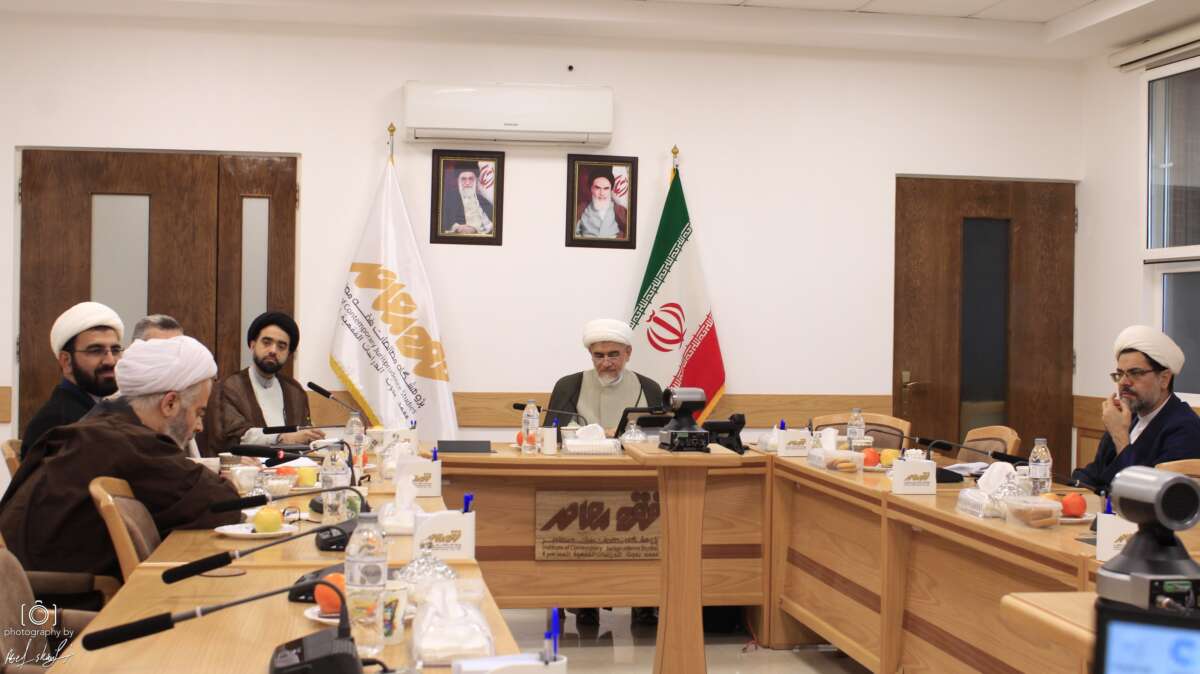
According to the Research Institute of Contemporary Jurisprudence, this series of sessions, titled “The Interplay between Jurisprudence and History,” aims to bridge the gap between these two disciplines. The initiative seeks to provide systematic frameworks for integrating historical perspectives into the interpretation of Sharia law.
During the inaugural session, Hujjat al-Islam wal-Muslimeen Dr. Mohsen Alviri, Professor of Islamic History at Baqir al-Olum University, remarked: “This discourse transcends mere intellectual curiosity. Our academic disciplines demand a dynamic rereading. While History must be reconstructed through religious criteria and indigenous frameworks, Fiqh must likewise re-evaluate its relations with external sciences to maintain its vitality.”
Illustrating his point with practical cases, Dr. Alviri noted: “In matters concerning Hajj rituals or the legal discourse on Mash al-Na’layn (wiping over footwear), historical insights clarify the jurists’ perspectives and provide a sharper understanding of a ruling’s implications. Furthermore, a diachronic study of jurisprudential opinions allows us to analyze the evolution of Fiqh across different eras.”
Professor Fazeli further emphasized the urgency of categorizing the links between Fiqh and History, stating: “Many jurisprudential disputes remain opaque without an understanding of their historical environments. When we uncover the specific conditions under which classical jurists issued their edicts, the rulings become more tangible and applicable to modern contexts. This represents the ‘living connection’ between Fiqh and History.”
The scientific secretary of the session, Hujjat al-Islam wal-Muslimeen Dr. Seyyed Mohammad Soltani, detailed the roadmap for the 12-part series: “Our objective is to establish a scholarly platform where researchers of both Fiqh and History can exchange diverse perspectives, ensuring that these scientific findings contribute to the expansion of both fields.”
The session concluded as a foundational step toward a new scientific trajectory, calling upon researchers to engage in academic synergy for the advancement of Contemporary Jurisprudence.