
Note: In circumstances where environmental crises have become one of the most serious challenges of contemporary civilization, revisiting the capacities of Islamic jurisprudence for a systematic and strategic confrontation with these crises constitutes an undeniable necessity—one that was emphasized in the scholarly session “Effective Environmental Jurisprudence: Requirements, Challenges, and Capacities.”
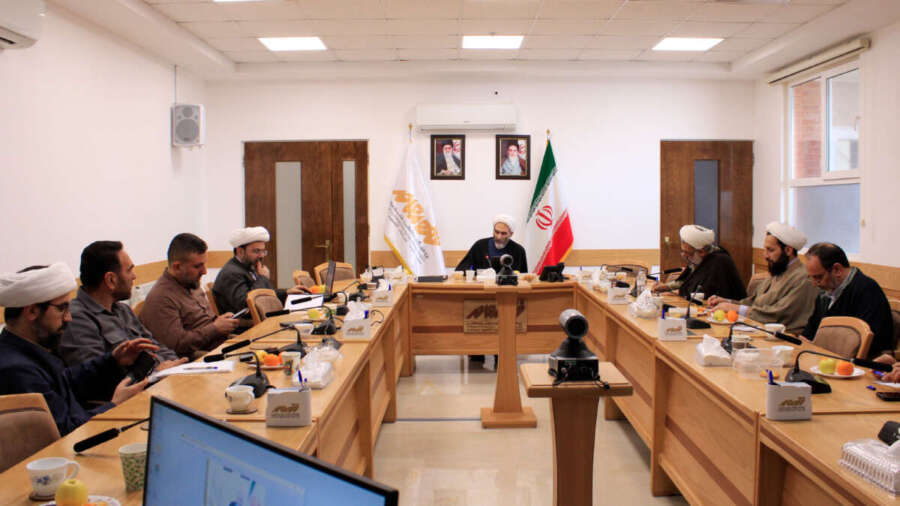
The 277th scholarly session of the Contemporary Jurisprudence Studies Research Institute, on the topic “Effective Environmental Jurisprudence: Requirements, Challenges, and Capacities,” was held in the presence of Ayatollah Ahmad Moballeghi, professor of advanced jurisprudence and principles (dars-e khārij) at the Qom Seminary.
At the beginning of the session, the scientific secretary, emphasizing the importance of the environmental issue in the contemporary world, pointed to the novelty of the term “environment” in scientific literature while noting its antiquity, and added: “It is clear that the environment has a new title, but its reality and instances are ancient; meaning that the environment predates humanity.”
The scientific secretary of the session, stating that modern life development has imposed unpredictable effects on water, air, soil, and natural systems, affirmed that Islamic jurisprudence, as a discipline concerned with the acts of duty-bound individuals (mukallafīn), must inevitably enter this domain and clarify its relationship with related sciences.
Environmental Jurisprudence; A Systematic and Theory-Based Discipline
Ayatollah Ahmad Moballeghi, at the outset of his remarks, referring to five years of research in this field, said: “What I present is, in fact, a description of a five-year discussion offered under the title ‘Environmental Jurisprudence.’”
He stated that environmental jurisprudence has not yet taken shape in a specialized and systematic manner within the seminaries, emphasizing: “Environmental jurisprudence in the seminary is a low-intensity discussion and cannot be considered a thriving one.”
The professor of advanced jurisprudence and principles at the Qom Seminary then presented his proposed definition of this discipline as follows:
“Environmental jurisprudence is a systematic, specialized, and theory-based discipline within the framework of Islamic jurisprudence that, based on scientific understanding of biological processes and cycles and relying on a layered theoretical methodology, engages in deducing rulings that undertake the just, protective, and sustainable regulation of the relationship between humans, society, and government with the environment.”
He explained that this definition has been formed on the basis of a five-year approach and rests on the interconnection between jurisprudence, empirical sciences, and theological and philosophical foundations.
Four Distinguishing Layers in Environmental Jurisprudence
Ayatollah Moballeghi continued by addressing the distinguishing layers of this approach, considering the first layer to be the “methodological layer.” According to him, specialized understanding of environmental issues is impossible without drawing upon interdisciplinary sciences such as environmental engineering, economics, and sociology.
By classifying environmental issues into “singular,” “processual,” “cyclical,” “systemic,” and “networked,” and citing examples such as water pollution, desertification, and species extinction, he explained that many of these issues have a nature beyond a single isolated event and are comprehensible within gradual but explosive processes.
In this context, he warned: “If you do not understand the process, you may issue a fatwa that anyone possessing plastic can throw it on the ground; whereas millions of small behaviors over a period of time create a major environmental crisis.”
The Necessity of “Jurisprudence of Risk” and “Jurisprudence of Strategies”
In another part of his remarks, Ayatollah Moballeghi emphasized the need to develop new branches in jurisprudence and said: “Here, the jurisprudence of risk must become active; we must create a discipline called the jurisprudence of risk.”
Referring to the fact that the concepts of danger and gharar in traditional jurisprudence require reinterpretation appropriate to today’s complex risks, he added that bypassing certain risks to preserve the environment or prevent greater threats requires a precise jurisprudential framework.
The professor of advanced jurisprudence and principles at the Qom Seminary also spoke of the necessity of forming a “jurisprudence of strategies” and stated: “Jurisprudence says that having a strategy is obligatory; but the content of the strategy is determined by the strategist, not the jurist.”
In his view, preserving the environment is impossible without formulating macro-level environmental strategies, and Islamic governments and societies must commit to designing and implementing these strategies in light of effective jurisprudence.
From Cyclical Issues to Networked Ones; Moving from Partial to Holistic Perspective
Referring to “cyclical issues,” he stated: “Cyclical issues are complex, recursive processes that occur within a natural or environmental cycle; such as the water cycle, carbon cycle, production and decomposition of organic matter in soil, or ecosystem recovery after fire and destruction.”
The professor of advanced jurisprudence and principles at the Qom Seminary posed the question, “What relation does ecosystem recovery have to jurisprudence?” and added: “Sometimes you perform an action that prevents this recovery, or you have a duty to prepare the ground for recovery but fail to do so. Jurisprudence must be aware of these cycles; otherwise, it will overlook a significant portion of the environment.”
He emphasized that jurisprudence in this field must both demand “institutional awareness-raising” and define “systematic behaviors that preserve the balance of cycles”; because the unawareness of responsible institutions themselves can become a factor in the degradation of natural cycles.
Ayatollah Moballeghi then addressed “systemic issues,” describing the environment as a “crossroads” and saying: “The paths of religion, economy, health, human life, and the future of generations all converge on the environment. The more the world advances, the tighter its connection with the environment becomes.”
Referring to the epistemic capacities of the Noble Qur’an in this regard, he stated: “If you become familiar with the ecosystems that the Qur’an focuses on, you will acquire remarkable knowledge. Precise interpretation of the Qur’an also takes shape in light of the environment.”
Continuing, he described “networked issues” as a complex model of multi-directional interactions among elements and added: “For example, the network of interactions among humans, industry, resources, markets, and nature; if you overlook any one of these, you have not performed fundamental work in the environmental domain.”
He stressed that these four levels—process, cycle, system, and network—each have their own specific jurisprudential requirements, and without understanding them, jurisprudence falls short in “prevention,” “balance-orientation,” and “policy-making.”
Temporal, Spatial, and Intergenerational Dimensions in Environmental Issues
In another section of his remarks, Ayatollah Moballeghi referred to the classification of issues in terms of “temporal” and “spatial” aspects and said: “Some degradations are short-term, some medium-term, some generational, and even transgenerational. Sometimes an activity is carried out that deprives future generations.”
He also referred to global degradations such as global warming, ocean acidification, and damage to the ozone layer, stating: “Some environmental issues have a global impact and are instances of ‘Corruption has appeared throughout the land and sea’ (Qur’an 30:41); these are layered and complex, and jurisprudence cannot remain indifferent to them.”
According to him, some issues are also “combined,” simultaneously processual, cyclical, intergenerational, and global, and therefore hold priority for society.
From Theological Theory to Ruling Deduction; The Necessity of Passing through Three Stages
Ayatollah Moballeghi continued by emphasizing that ijtihād in environmental jurisprudence must “begin with theory and reach the ruling,” stating: “First, we must have a theological theory concerning nature, humanity, and their relation to God; then a philosophical theory (philosophy of sharīʿah), followed by a jurisprudential theory, and only then proceed to deduce rulings.”
He warned that without these infrastructures, jurisprudential understanding will remain superficial and weak, adding: “If we consider creation (takwīn) and legislation (tashrīʿ) to originate from a Wise God, we must establish harmony between them; otherwise, we arrive at a secular environmentalism disconnected from religion.”
The professor of advanced jurisprudence and principles at the Qom Seminary also stressed the need to strengthen the role of the Qur’an in this domain and said: “The Qur’an has important projects, one of which is the environment. If you have the correct method, extracting environmental verses will be very straightforward.”
Effective Environmental Jurisprudence 3
The Necessity of Environmental Jurisprudence; Beyond Environmental Ethics
In the question-and-answer section, one of the attendees raised the question: “Given the efforts of the world’s rational people in the environmental domain, what is the necessity for jurisprudence to enter?” and requested further explanation of this necessity.
Ayatollah Moballeghi responded: “There is no need for jurisprudence to necessarily arrive at a result different from that of rational people; it may reach the same conclusions, but the opinion of the sharīʿah must be extracted. Religion is a powerful factor, and if it supports the environment, it creates greater guarantees.”
He added: “Environmental jurisprudence enriches the religious discourse of this domain, provides specific rulings, balances the jurist’s mind in other areas, and can even produce a special spirituality in society.”
Referring to the appeal of this discourse to the present generation, he stated: “When the contemporary youth sees that religion has such progressive statements about the environment, they are astonished.”
Conflict and Degradation; Critique of the Approach of “More Important and Important”
In response to a question about the possibility of applying the rule of “more important and important” (ahamm wa muhimm) in environmental degradations, Ayatollah Moballeghi stated: “If someone properly enters the environmental domain, they will see that nothing grants permission for degradation. Many degradations result from ignorance; if precise understanding existed, degradation would not occur in the first place.”
At the end, the scientific secretary of the session, summarizing the discussions, announced that the continuation of the second to fourth layers of the discussion will be pursued in future sessions and expressed appreciation to Ayatollah Moballeghi for elucidating the “methodological layer” of environmental jurisprudence.
The outcome of this session’s discussions indicates that environmental jurisprudence is not merely the addition of a few new rulings to jurisprudential chapters, but rather an effort to redefine the relationship of humans, society, and government with nature within a theoretical and systematic framework—a framework that, by understanding environmental processes, cycles, and networks and relying on theological and Qur’anic foundations, can provide religious and strategic support for the protection of the environment and the rights of future generations.