
Review of Martyr Professor Morteza Motahari’s Book A Perspective on the Islamic Economic System

Principles of Economic Jurisprudence/15

It could be argued that A Perspective on the Islamic Economic System, alongside The Issue of Hijab, is among the most controversial works of Martyr Professor Morteza Motahari. The accusation that Professor Motahari essentially endorsed the economic theory of socialism in this book has been a topic of debate in academic circles for years, leading to extensive discussions and critiques. Below is a brief review of this book, published posthumously after the martyrdom of Professor Motahari.
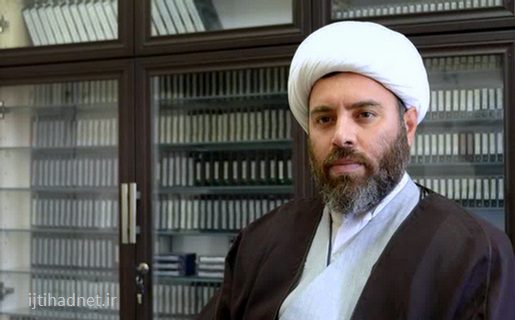
Faculty Member of the Economics Department at the Imam Khomeini Institute in an Exclusive Interview with Contemporary Jurisprudence:

Principles of Economic Jurisprudence/17

Although emerging fields of jurisprudence may often appear underdeveloped, Islamic economic jurisprudence, backed by over a thousand years of jurists’ engagement with economic matters, enjoys considerable depth and richness. As such, achieving a significant global presence for Islamic economic jurisprudence is not an unattainable goal. However, Dr. Mohammad Javad Tavakoli believes that changes in the approach and methodology of economic jurisprudence are necessary to realize this ambition. An assistant professor in the Economics Department at the Imam Khomeini Educational and Research Institute, holding a Ph.D. in the philosophy of economics from Erasmus University Rotterdam, Dr. Tavakoli discusses the requirements for Islamic economic jurisprudence to establish a robust international presence in an exclusive interview with Contemporary Jurisprudence.

A Brief Overview of Books Addressing Economic Jurisprudence in General

Principles of Economic Jurisprudence/18

Economic jurisprudence, while a longstanding topic within jurisprudential texts, has emerged as an independent branch of jurisprudence in recent decades. Numerous books and articles have been written on various topics within this field, but few address economic jurisprudence comprehensively and from a macro perspective. Below is a concise report on books that tackle economic jurisprudence holistically, divided into two sections: Persian-language books and Arabic-language books.

Hossein Mehdizadeh

Principles of Economic Jurisprudence/19

The late Hosseini (may his soul rest in peace) did not consider the starting point of transformation to lie in legislation, the inclusion of a cooperative sector in the constitution, prioritizing labor and distributive or even political justice, merely eliminating banking usury, nationalizing or privatizing the economy, or transparency. Instead, he viewed the focal point as understanding how to conceptualize the social human beings described in Islamic teachings and jurisprudence as a continuum, institutionalizing them through economics, culture, and politics, and making society a platform for their growth and perfection.

Seyed Hamid Joshqani

Principles of Economic Jurisprudence/20

Establishing an effective and systematic branch of jurisprudence requires clarifying its foundations, assumptions, specific jurisprudential rules, and the network of related issues. Among these, specific jurisprudential rules help ensure that the branch is methodical and disciplined, with its arguments coherent and structured. Hojjat al-Islam Dr. Seyed Hamid Joushghani, Secretary of the Economic Jurisprudence Group at the Research Institute for Contemporary Jurisprudence Studies and a faculty member of the Economics Department at Al-Mustafa International University in Qom, addresses some of the rules and dimensions of economic jurisprudence in this exclusive note.

Head of the Economics and Governance Group at the Borhan Leadership Center, in an Exclusive Interview with Contemporary Jurisprudence

Principles of Economic Jurisprudence/21

Hojjat al-Islam Mohammad Hadi Ansaripour, an economics researcher who has been engaged in research and writing in this field for several years, serves as the head of the Economics and Governance Group at the Borhan Leadership Center. In an exclusive interview with Contemporary Jurisprudence, he discussed the foundations and assumptions of economic jurisprudence. He considers the most critical foundation of Islamic economics to be its reliance on the social system. According to this professor and researcher of economic jurisprudence, Islamic economics is a people’s economy, not a governmental or private-sector-driven one.

Economic Jurisprudence Researcher, in an Exclusive Interview with Contemporary Jurisprudence

Principles of Economic Jurisprudence/22

Hojjat al-Islam Amir Hossein Saffarian, a graduate of the Meshkat Seminary Complex, has been teaching at this institution for years. Alongside several other graduates of the complex, he has been exploring topics in Islamic economics within the Economics and Governance Group at the Borhan Leadership Institute for several years. He believes that to provide effective answers to questions in economic jurisprudence, we must uncover the fundamental principles and approaches of Islam that constitute its economic system. Otherwise, we are playing on a field that does not belong to Islamic economics, and any conclusions we draw will not contribute to forming the ideal Islamic society.

Faculty Member of the Imam Khomeini Educational and Research Institute, in an Exclusive Interview with Contemporary Jurisprudence

Principles of Economic Jurisprudence/23

Economic jurisprudence can perhaps be considered one of the most impactful and debated emerging fields of jurisprudence, leading to numerous challenges. Dr. Mohammad Javad Tavakoli, who holds a bachelor’s and master’s degree in economics from the Imam Khomeini Educational and Research Institute and a PhD in the philosophy of economics from Erasmus University Rotterdam, addressed these challenges in an interview with Contemporary Jurisprudence. He also outlined the necessary steps for developing the Islamic economic system.

Far from ethics, very close to law

In a special note, Hujjat al-Islam wa al-Muslimin Husayn Adabi states:

Jurisprudence of Judgment/4

    Futures studies is a field that has been around for decades, and although it is considered a new phenomenon in some circles, it has long been considered an independent science in the world’s scientific fields, and of course, …