
Member of the Faculty of the Institute for Humanities and Cultural Studies, in an Exclusive Interview with Contemporary Jurisprudence:

Jurisprudence of Governance in Cyberspace/8

Effective governance in cyberspace is not only a challenge for our country or exclusively for Islamic countries but for all countries that engage with cyberspace. This underscores the critical need to study cyberspace governance models in other countries.
🔹Dr. Tayyebeh Mohammadi Kia, holder of a PhD in International Relations and a faculty member of the Institute for Humanities and Cultural Studies, in an exclusive interview with Contemporary Jurisprudence, explores the requirements for cyberspace governance and the experiences of other countries in this regard. Her proficiency in German and English has provided her with valuable insights for studying these experiences.
The full text of this exclusive interview is presented below: 🔻
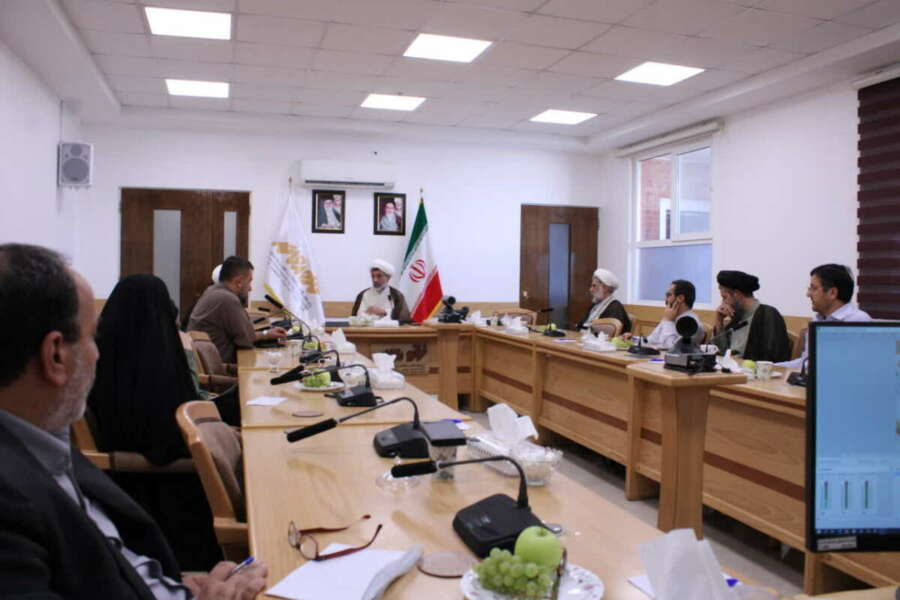
Scientific Session of Contemporary Jurisprudence Studies Institute's "Method on Sundays"

Hujjat al-Islam Dr. Hamid Parsania in Session 56: Methodology as the Key to Operationalizing Knowledge

The Institute for Contemporary Jurisprudence Studies, in its 56th “Method on Sundays” session, with the presence of Hujjat al-Islam Dr. Hamid Parsania, a member of the Supreme Council of the Cultural Revolution, explored the “Methodological Requirements for Transforming Islamic Knowledge into Public Culture.”

This specialized session, attended widely both in-person and online by enthusiasts, saw Dr. Parsania introduce methodology as the key to operationalizing and institutionalizing religious knowledge in society. He highlighted the distinction between methods of cognition and the dissemination of knowledge, underscoring the critical role of tools such as rhetoric, dialectic, and poetry in cultural transmission.

Additionally, the session addressed topics such as cultural authority, the relationship between truth and social constructs, and the challenges of agency within the cultural hegemony of the West. This scientific session provided a valuable opportunity for rethinking approaches to promoting religious culture and enhancing religiosity in the public sphere.

Senior Researcher at the Center for Political and International Studies of the Ministry of Foreign Affairs, in an exclusive interview with Contemporary Jurisprudence:

Jurisprudence of International Relations: Nature, Dimensions, and Challenges/3

Although international relations gained more structure after the end of World War II and the establishment of the United Nations, and the science of international relations took shape, the engagement of jurisprudence in this field has not been very significant thus far. It could be said that it is only in the last decade that the volume of jurisprudential writings on international relations has seen a notable increase.
🔹Regarding the nature of the jurisprudence of international relations and its distinction from similar concepts such as the jurisprudence of international law, we spoke with Dr. Seyed Mohammad Sadatinejad, Senior Researcher at the Center for Political and International Studies of the Ministry of Foreign Affairs. He considers one of the major challenges in academia to be the conflation of disciplines such as international relations and international law. He has published numerous books and articles on the jurisprudence of international relations, including the three-volume work Jurisprudence of International Relations.
View the full text of the interview: 🔻