
Dr. Naser Elahi in an exclusive interview with Contemporary Jurisprudence:

Jurisprudential Aspects of Public Participation in the Economy/3

Dr. Naser Elahi has been engaged in teaching and researching economics for over three decades. This faculty member of the Economics Department at Mofid University, while completing advanced seminary studies at the level of external lessons, pursued higher education up to a doctorate in economics and obtained a post-doctorate in “Ethics and Economics” from the University of Notre Dame, Indiana, USA.
🔹The associate professor of the Economics Department at Mofid University, regarding the experiences of other countries in people-based economics, believes that no country has a truly free and people-based economy because there is no free democracy in the world. However, he considers people-based governance the only path to economic elevation.
The full text of the exclusive interview of Contemporary Fiqh with this veteran professor and researcher of economics is as follows: 🔻
Jurisprudence of Governance in Cyberspace/9

Governance in cyberspace is considered an emerging topic in global academic literature. The rapid expansion of cyberspace and its profound impact on human life have doubled the importance of proper governance in this domain. Below is an index of articles that, either directly or indirectly, address the topic of governance in cyberspace or its subtopics and foundations.

Mohammad Javad Ahmadkhani

Principles of the Jurisprudence of Education/3

Educational jurisprudence, sometimes referred to as the jurisprudence of education and upbringing, and occasionally conflated with ethical jurisprudence, is an emerging branch among contemporary jurisprudential disciplines. A fundamental requirement for any jurisprudential branch is the existence of sufficient jurisprudential rules to regulate the process of deducing and discovering legal rulings, thereby excluding unsystematic and non-scholarly content from that branch.
🔹Hujjat al-Islam wal-Muslimeen Mohammad Javad Ahmadkhani, a professor of advanced levels at the Qom Seminary, in this exclusive article for Contemporary Jurisprudence, explains these rules and highlights several specific rules for educational jurisprudence.
View the full text of the exclusive article: 🔻

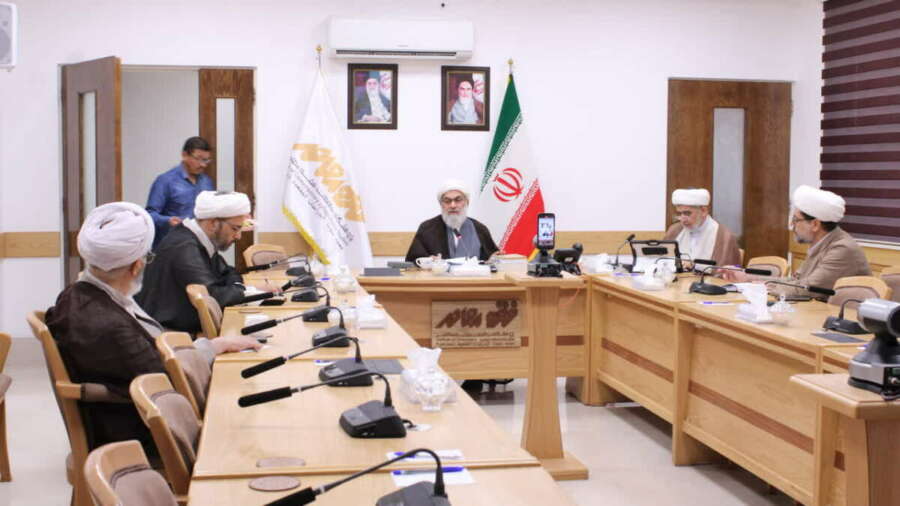
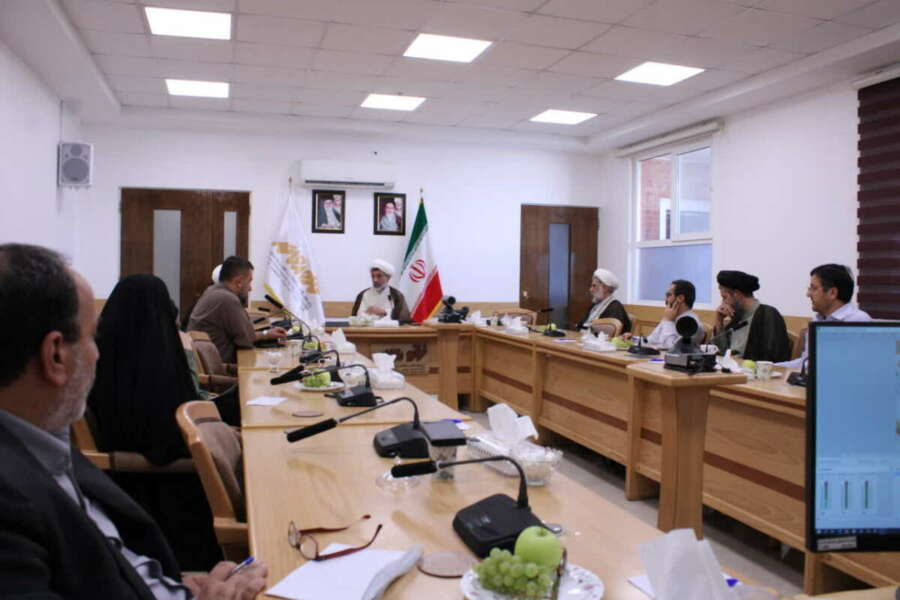
The 211th Scientific Session of the Social Jurisprudence, Ethics, and Education Group at the Institute of Contemporary Jurisprudential Studies

Dr. Mahmoud Taqizadeh Davari, President of the Institute of Shia Studies, in the continuation of the specialized sessions of the Social Jurisprudence Group, examined the foundations and components of social jurisprudence

Under the auspices of the Institute of Contemporary Jurisprudential Studies, the 211th scientific session was held with the participation of Hujjat al-Islam wal-Muslimeen Dr. Mahmoud Taqizadeh Davari, President of the Institute of Shia Studies. In this specialized session, the concept of social jurisprudence as an emerging and interdisciplinary field between jurisprudence and sociology was explored.
🔹Hujjat al-Islam wal-Muslimeen Dr. Mahmoud Taqizadeh Davari, President of the Institute of Shia Studies, referencing the theories of Ibn Khaldun and Giddens, identified social institutions and emerging challenges such as modern technologies, global media, environmental issues, and social changes as topics that social jurisprudence must address. This field, going beyond traditional jurisprudence, responds to the complexities of contemporary society and can offer innovative solutions through social ijtihad (jurisprudential reasoning) and an understanding of public interest.
🏷The session’s chair, Hujjat al-Islam wal-Muslimeen Dr. Mohsen Olveiraei, while emphasizing the importance of these discussions, announced efforts to apply jurisprudence to real and emerging societal issues and stated that this series of sessions would continue with topics related to climate, environmental concerns, and modern technologies.
View the full text of the news regarding this scientific session:🔻

Member of the Faculty of the Institute for Humanities and Cultural Studies, in an Exclusive Interview with Contemporary Jurisprudence:

Jurisprudence of Governance in Cyberspace/8

Effective governance in cyberspace is not only a challenge for our country or exclusively for Islamic countries but for all countries that engage with cyberspace. This underscores the critical need to study cyberspace governance models in other countries.
🔹Dr. Tayyebeh Mohammadi Kia, holder of a PhD in International Relations and a faculty member of the Institute for Humanities and Cultural Studies, in an exclusive interview with Contemporary Jurisprudence, explores the requirements for cyberspace governance and the experiences of other countries in this regard. Her proficiency in German and English has provided her with valuable insights for studying these experiences.
The full text of this exclusive interview is presented below: 🔻

Scientific Session of Contemporary Jurisprudence Studies Institute's "Method on Sundays"

Hujjat al-Islam Dr. Hamid Parsania in Session 56: Methodology as the Key to Operationalizing Knowledge

The Institute for Contemporary Jurisprudence Studies, in its 56th “Method on Sundays” session, with the presence of Hujjat al-Islam Dr. Hamid Parsania, a member of the Supreme Council of the Cultural Revolution, explored the “Methodological Requirements for Transforming Islamic Knowledge into Public Culture.”

This specialized session, attended widely both in-person and online by enthusiasts, saw Dr. Parsania introduce methodology as the key to operationalizing and institutionalizing religious knowledge in society. He highlighted the distinction between methods of cognition and the dissemination of knowledge, underscoring the critical role of tools such as rhetoric, dialectic, and poetry in cultural transmission.

Additionally, the session addressed topics such as cultural authority, the relationship between truth and social constructs, and the challenges of agency within the cultural hegemony of the West. This scientific session provided a valuable opportunity for rethinking approaches to promoting religious culture and enhancing religiosity in the public sphere.

Senior Researcher at the Center for Political and International Studies of the Ministry of Foreign Affairs, in an exclusive interview with Contemporary Jurisprudence:

Jurisprudence of International Relations: Nature, Dimensions, and Challenges/3

Although international relations gained more structure after the end of World War II and the establishment of the United Nations, and the science of international relations took shape, the engagement of jurisprudence in this field has not been very significant thus far. It could be said that it is only in the last decade that the volume of jurisprudential writings on international relations has seen a notable increase.
🔹Regarding the nature of the jurisprudence of international relations and its distinction from similar concepts such as the jurisprudence of international law, we spoke with Dr. Seyed Mohammad Sadatinejad, Senior Researcher at the Center for Political and International Studies of the Ministry of Foreign Affairs. He considers one of the major challenges in academia to be the conflation of disciplines such as international relations and international law. He has published numerous books and articles on the jurisprudence of international relations, including the three-volume work Jurisprudence of International Relations.
View the full text of the interview: 🔻

Scientific Session “Method on Sundays” at the Research Institute for Contemporary Jurisprudence Studies

The 51st session of the summer series “Method on Sundays” emphasized the necessity of expanding the responsibilities of jurists beyond traditional jurisprudence and the importance of religious culturalization to realize religion in society

The 51st session of “Method on Sundays,” focusing on the significant topic of “The Method of Transforming Religious Propositions into Social Constructs,” was accompanied by expert perspectives and constructive critique. The main discussions revolved around the necessity of expanding jurists’ responsibilities beyond traditional jurisprudence, the importance of interaction between science and religion, the challenges of socializing religion, and defining the boundary between jurisprudence and domains beyond it. Additionally, the importance of creating a dominant normative environment and religious culturalization as key steps toward realizing the establishment of religion was emphasized.
This session provided an important platform for initiating deeper discussions and developing effective methods in the field of socializing religion, with plans announced for continuing the discussions in future sessions.
View the full text of the news along with the audio of this scientific session: 🔻

Dr. Ramezanali Bazrafshan, in an exclusive interview with Contemporary Jurisprudence:

Jurisprudence of Governance in Cyberspace/7

The rapid growth of digital technologies and cyberspace tools has made predicting the future of this space and its governance exceedingly challenging. However, Dr. Ramazanali Bazrafshan, a member of the board of the Scientific Association for Media and Propagation of the Seminary, believes that the role of jurisprudence in the future governance of cyberspace will be greater than it is today. In an exclusive interview with Contemporary Jurisprudence, he outlined the most critical issues facing the future governance of cyberspace and discussed solutions to address its upcoming challenges. He was among the few academic activists in the field of media and cyberspace who spoke neither with despair nor with uncritical fascination about the future of cyberspace, instead providing a precise depiction of its future and offering practical solutions.
The full text of this engaging and insightful interview is presented below: 🔻

A faculty member of the Akhund Khorasani Specialized Center, in an exclusive interview with Contemporary Jurisprudence:

Analysis of Contemporary Jurisprudence Based on a Minimalist Approach to Fiqh/3

In recent decades, much has been said about minimalist and maximalist jurisprudence, but few have thoroughly examined its precise meaning and its differences from other approaches. Dr. Bilal Shakeri, a faculty member of the Akhund Khorasani Specialized Center, in an exclusive interview with Contemporary Jurisprudence, elaborated on the various definitions of minimalist and maximalist jurisprudence, as well as their foundations and implications. He believes that, contrary to common perception, there is no single, uniform definition of minimalist jurisprudence; rather, at least four definitions can be identified.
View the full text of this exclusive interview: 🔻