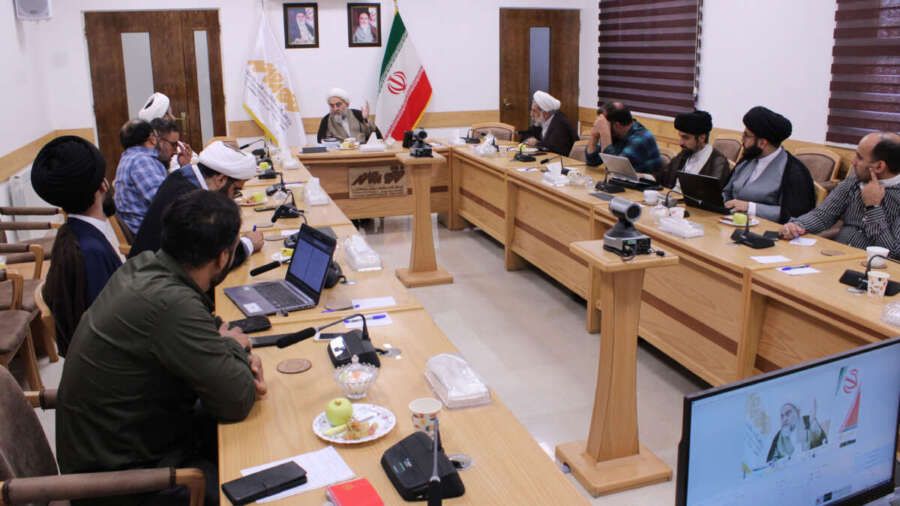
The Fifty-eighth Specialized Session of "Method on Sundays" Was Held at the Research Institute for Contemporary Fiqh
The Necessity of Methodological Transformation in Institutionalizing Religious Knowledge in Public Culture
Hujjat al-Islam wa al-Muslimin Mohammad-Taqi Sobhani Emphasized the Need to Redefine Knowledge Structures and Make Islamic Sciences Interdisciplinary
In a specialized session on the topic of “Methodological Imperatives for Transforming Islamic Knowledge into Public Culture,” Hujjat al-Islam wa al-Muslimin Mohammad-Taqi Sobhani, Head of the Center for Deepening Religious Faith and Countering Deviant Beliefs, emphasized the importance of the position of “method” in implementing religious knowledge in public culture. He considered this process a bridge between theorization and real life and spoke of the lack of attention to this field.
🔹The Head of the Center for Deepening Religious Faith identified the three main flaws of the traditional knowledge system as elitist and incomprehensible language for the public, a minimalist and conceptual view without explaining its practical application in life, and the dominance of a comparative-identitarian approach.
🏷With a critique of the linear system of religious education, he enumerated the networked system of religious knowledge, in which ethics, beliefs, and rulings are intertwined, and considered the redefinition of faith as a graded process, the distinction between the problem and the real needs of man, and the necessity of utilizing human sciences such as cultural studies, social psychology, and media studies as prerequisites for the application of knowledge.
View the full text of the news along with the audio of this scholarly session:🔻