
Sayyedeh Maryam Borqei:

Examination of the Jurisprudential Dimensions of Spousal Violence/5

While extensive jurisprudential discussions and analyses regarding male circumcision have been conducted and its dimensions explored in jurisprudential texts, female circumcision has rarely been addressed with serious jurisprudential scrutiny. Perhaps the modesty and decorum expected of girls have also influenced discussions of this jurisprudential ruling.
🔹 This has resulted in diverse opinions within the Islamic world regarding female circumcision; in some Islamic countries, this practice is prohibited, while in others, it continues to be observed as a commendable tradition.
🏷 Dr. Sayyedeh Maryam Borqei, head of the Research Institute of Jurisprudence and Legal Foundations at the Islamic Studies Research Institute of Jami‘at al-Zahra, examines the jurisprudential dimensions of female circumcision and the relevant narrations in this exclusive article.
View the full text of this exclusive article: 🔻
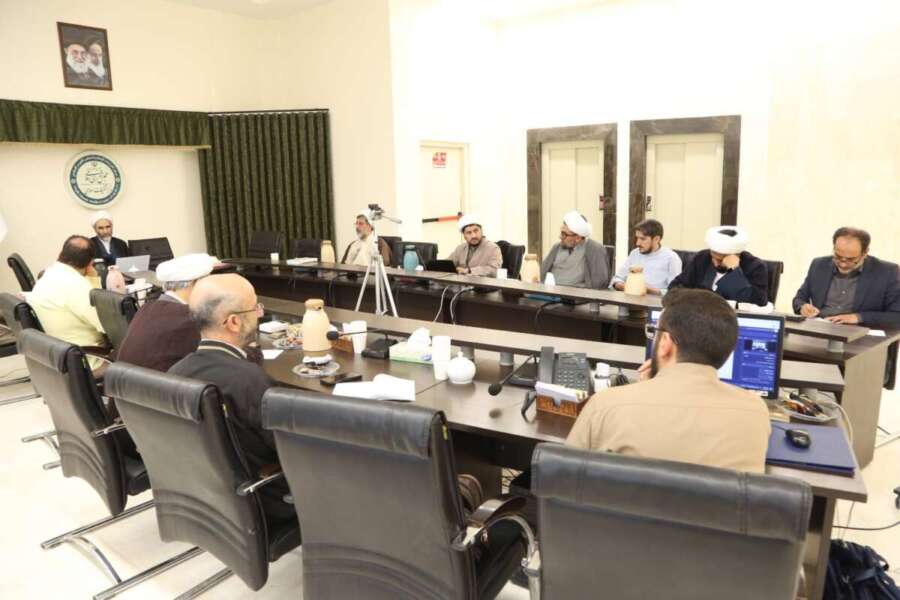
Explaining Six Models of Interaction Between Jurisprudence and Law in Legislation at the 60th “Method on Sundays” Session

The 60th scientific session of “Method on Sundays” with the theme “Methodology of Legislative Governance Based on Islamic Principles” was held on Sunday, 13 Mehr 1404 (October 5, 2025), at the Islamic Research Center of the Parliament.
🔹 In this session, presented by Ayatollah Ahmad Moballeghi, the processes and methods of interaction between jurisprudence and law in legislation were examined. Ayatollah Moballeghi emphasized the necessity of three stages—theorization, jurisprudential deduction, and legislation—and warned against reducing jurisprudence to a mere legal tool.
🔸 The professor of advanced jurisprudence and principles at the Qom Seminary critiqued six models of the relationship between jurisprudence and law, introducing the “integrated fusion” model as the optimal approach. He also stressed the importance of a deep connection between jurisprudence and law to achieve religious legislation and prevent disorder in the legal system. This session was held with the aim of enhancing the quality of Islamic legislation and benefiting from the scientific experiences in the fields of jurisprudence and law.
View the full text of the news: 🔻

Dr. Mohadeseh Moeinifar, in an exclusive interview with Contemporary Jurisprudence:

Jurisprudence of Governance in Cyberspace/22

It could perhaps be said that “virtual space” falls into the category of being deceptively simple yet complex; at first glance, it appears clear and obvious, but upon reflection, it becomes evident that it has many ambiguous dimensions. Regarding the precise meaning of “jurisprudence of virtual space,” Dr. Mohadeseh Moeinifar believes that the meaning of “jurisprudence of virtual space” is entirely distinct from “jurisprudence of cyberspace.” A faculty member at Imam Khomeini International University in Qazvin, who has conducted numerous studies and research on the jurisprudential and legal dimensions of virtual space, in an exclusive interview with Contemporary Jurisprudence, elaborated on the foundations, presuppositions, jurisprudential rules, and differences between the jurisprudence of virtual space and similar fields Rosary of Imam Khomeini International University in Qazvin.