
Hujjat al-Islam wal-Muslimeen Dr. Parsania: Legislation is inherently a collective act and necessitates a fundamental reconsideration of jurisprudential methodology
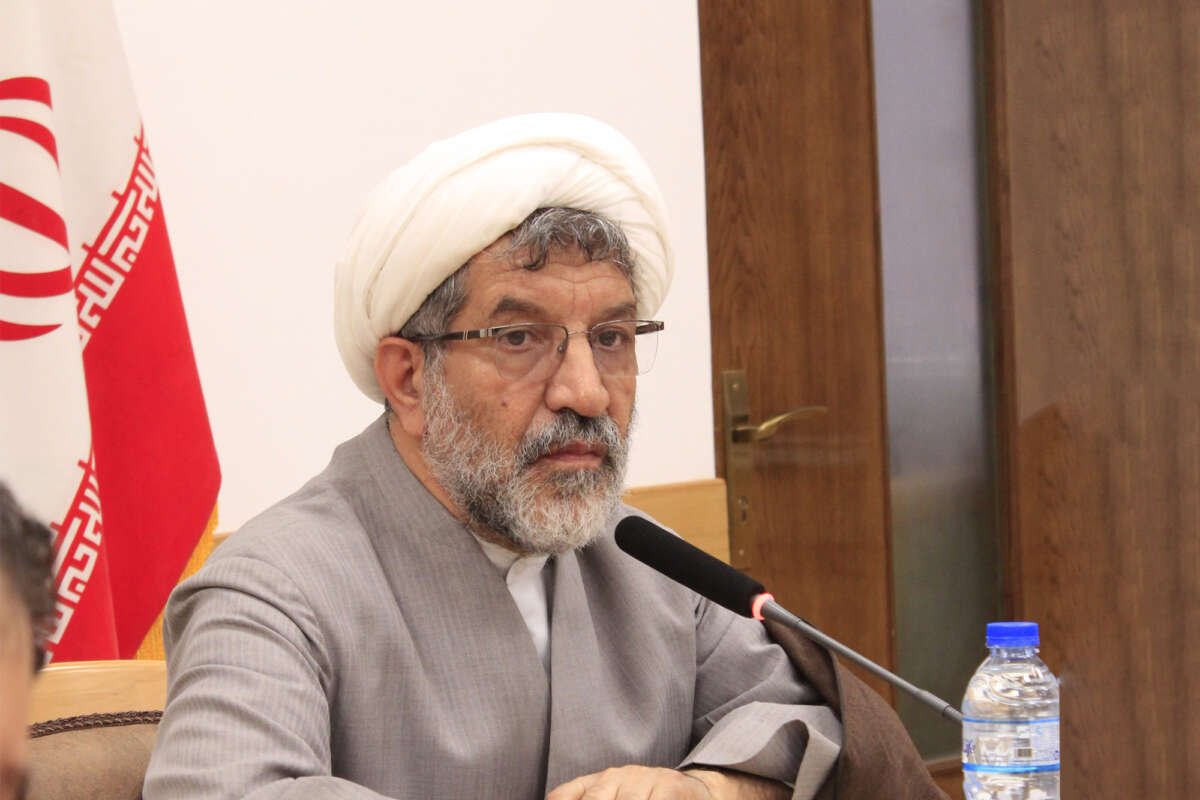
Through a discussion of the essence of legislation, the distinction between fatwa jurisprudence and legislative jurisprudence, the role of public authority in legislation, and the imperative of attending to social circumstances and executive capacities, he clarified both the theoretical and practical dimensions of legislation within an Islamic system.
According to the Public Relations Office of the Contemporary Jurisprudence Studies Institute, this session constituted the fifteenth meeting in the series titled “Methodology of Legislative Governance Based on Islamic Standards”. It was organized by the Contemporary Jurisprudence Studies Institute, supported by the “Development and Empowerment of Islamic Sciences” desk of the Islamic Propagation Office, and held in cooperation with the “Jurisprudence and Law Group” of the Islamic Parliament Research Center.
Dr. Parsania, addressing the duties of jurisprudence in the field of legislation, stated: “The core issue is: What are the jurisprudential rulings that govern the legislator? How ought legislation to be conducted? And what responsibilities rest upon the legislator? This field lies within the proper domain of jurisprudence and the jurist’s activity; its method is likewise the jurisprudential method—namely, a dynamic jurisprudence of the Jawāherī tradition.”
He noted that legislation, in its modern conventional meaning, pertains to the sphere of execution and collective life, adding that law—in its general formulation—is invariably tied to time, place, and the concrete conditions of society, and cannot be meaningfully grasped apart from particular circumstances. He clarified: “Human conduct in time and place necessarily relates to particulars, and law, accordingly, always pertains to concrete and particular subjects. This feature constitutes one of the essential elements of law.”
Distinguishing between general jurisprudential rulings and their concrete application at the stage of execution, the member of the Supreme Council of the Cultural Revolution emphasized that the conventional task of the jurist is to identify general rules and rulings—not to designate particular instances. This task becomes significantly more complex in the realm of social legislation due to its collective character.
Critiquing modern legislative approaches that proceed from particulars to universals, he cautioned that such an orientation weakens the status of jurisprudence as a science, stating: “When the legislative process is ordered from particular to universal, neither jurisprudence nor reason retains any meaningful space. In such a framework, jurisprudence is degraded from a science concerned with truth and falsehood to the level of a mere personal tendency.”
Pointing to the fundamental distinction between individual and collective life, Dr. Parsania stressed that legislation is invariably accompanied by general obligation, and it is precisely this characteristic that makes theoretical reconsideration of the jurisprudential methodology of legislative governance an urgent necessity.
Continuing, and distinguishing between personal decision-making and social obligations, he underlined that legislation is essentially collective in nature and concerns the determination of duty for the general body of society. Citing examples from administrative, security, and governance domains, he observed that social-level law-making transcends the regulation of individual conduct and necessitates the exercise of public authority in the executive phase.
Discussing the concept of “ḥukm” in Islamic thought, he explained that—in the epistemological and jurisprudential logic of Islam—ḥukm does not signify the imposition of personal will, but rather the discovery and declaration of the divine ruling. Reason apprehends the ruling, transmitted reports articulate it, and human will—in the practical realm—acquires meaning only under divine truth and ruling.
Distinguishing the jurisprudence of fatwa from the jurisprudence of legislation, he explained that legislative jurisprudence does not deal with general rulings as such, but with the stage at which a general ruling must acquire concrete executive determination within specific conditions of time, place, and society. Hence the primary question in any legislative process is: Who possesses the legitimate authority to impose obligations upon others at the collective level, and to whom does authority in social decision-making belong?
Dr. Parsania emphasized that subject-matter determination in legislation is not the exclusive preserve of jurisprudence; rather, it involves an array of disciplines and specialized fields. Nevertheless, jurisprudence retains a decisive role in defining authority, criteria, and the boundaries of decision-making. The legislator, he argued, must be knowledgeable both in general sharʿī rulings and in the precise realities of social conditions, conflicting interests, and executive feasibility.
Drawing on the historical experience of Shia Islam—particularly the Constitutional era—he recalled that Shia jurisprudence, owing to its prolonged historical distance from political power, has had limited opportunity to develop legislative discussions. Yet it possesses ample theoretical capacity to articulate just and truth-based law-making. Invoking the thought of Mīrzā-ye Nāʾīnī, he noted that even absent a fully legitimate ruler, the de facto ruler can be constrained to observe justice, maintain security, and remain within sharʿī boundaries.
Emphasizing the distinction between the “ideal state of affairs” and the “existing state of affairs”, this seminary and university professor stated that jurisprudence delineates the ideal form of law and governance, but its realization in practice requires attention to existing capacities, societal strength, and popular acceptance. Social receptivity, he stressed, is the condition of law’s execution—not the source of its legitimacy.
In conclusion, Dr. Parsania described legislation as a composite process in which jurisprudence, inherited laws, executive considerations, and the discernment of expediency (maṣlaḥa) all play active roles in the practical arena. Referring to the legislative architecture of the Islamic Republic, he viewed the existence of institutions such as the Guardian Council and the Expediency Discernment Council as responses to precisely these complexities. He concluded that effective legislative governance is unattainable without the integrated engagement of jurisprudential knowledge, subject-specific expertise, and accurate perception of social realities.