A Roadmap for Contemporary Jurisprudence: Methodological Imperatives for Transforming Jurisprudential Propositions into Public Culture

The 74th "Method on Sundays" Session:

The "System – Paradigm – Program" Framework Introduced as a Strategic Roadmap

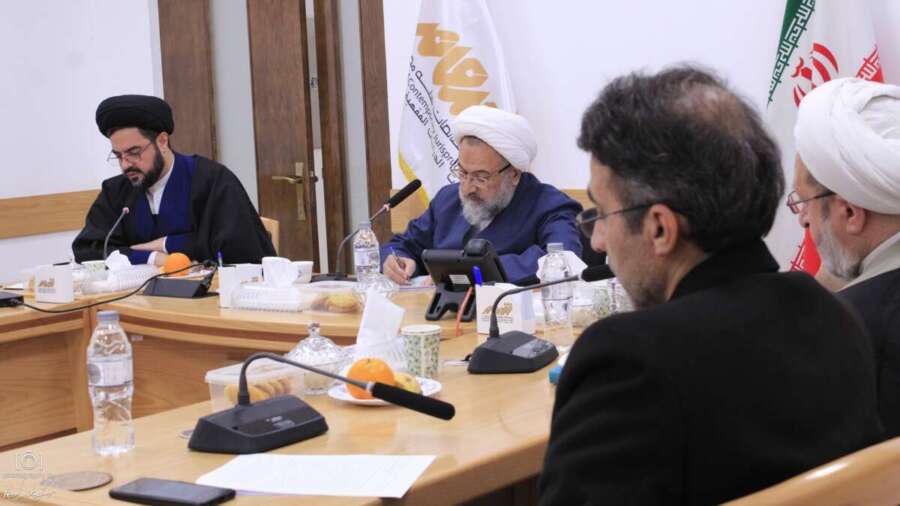
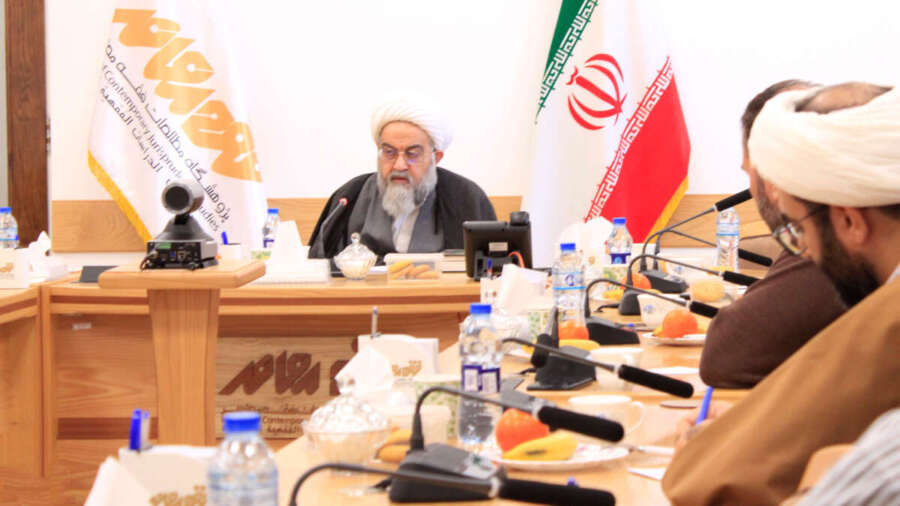
On Sunday, January 11, 2026 (21 Dey 1404), the Research Institute for Contemporary Jurisprudence Studies hosted the 74th installment of its “Method on Sundays” series. Titled “Methodological Imperatives of Transforming Jurisprudential Propositions into Public Culture,” the event was supported by …
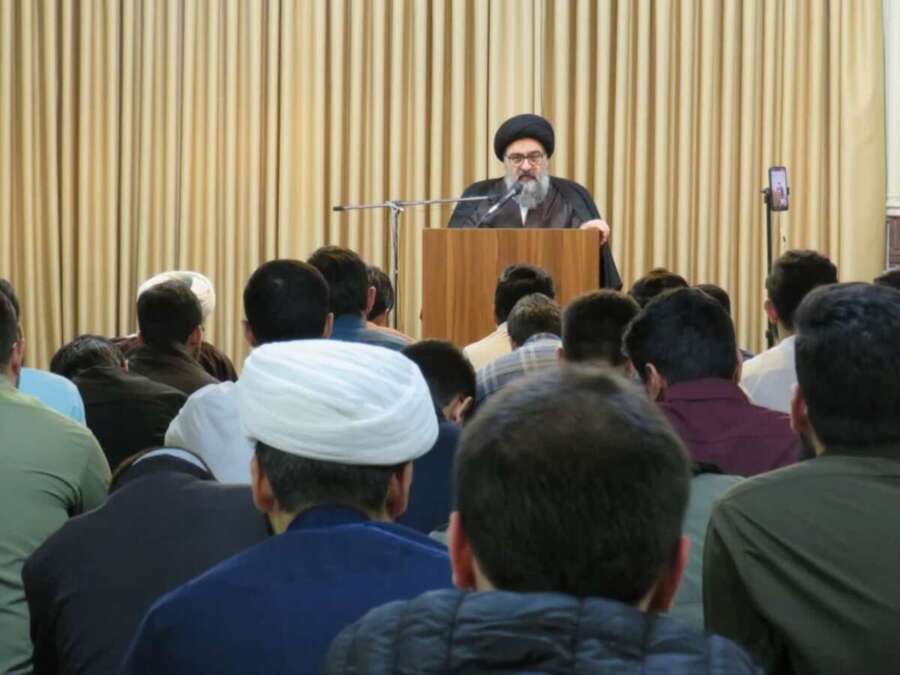
Hujjat al-Islam wal-Muslimeen Alireza Mohammadi, in an Exclusive Interview with Contemporary Jurisprudence:

Judicial Practical Principles/19

Note: Hujjat al-Islam wal-Muslimeen Alireza Mohammadi has been a prominent figure in the Dars-e Kharij (Advanced Research Studies) of Jurisprudence and Legal Principles at the Qom Seminary for many years and serves as a professor of high-level seminary curricula. Born in 1976 in …

Ayatollah Sayyid Mujtaba Noormofidi: The Era of Occultation is an Age of Perplexity and a Trial of Discerning Priorities

Lapses in Identifying Priorities: The Most Costly Errors of the Elite

Avoiding “Discernment Perplexity”: Ayatollah Nourmofidi’s Key Paradigm for Navigating the Occultation According to the Site of the Research Institute for Contemporary Jurisprudence Studies, Ayatollah Sayyid Mujtaba Nourmofidi, Professor of Advanced Studies (Dars-e Kharij) at the Qom Seminary and Head of …

Abdolvahab Forati

Analysis of Contemporary Jurisprudence Based on a Minimalist Approach to Fiqh/12

Note: “Minimalist Jurisprudence” and “Maximalist Jurisprudence” (Fiqh-e Hadaqsari) are two terms used so frequently that even non-experts in jurisprudence use them. The maximalist approach to jurisprudence seeks to discover all rulings for the day’s issues of society from the science of …

Mohammad Javad Ahmadkhani

Judicial Practical Principles/18

Note: The conflict of Principle (Asl) and Appearance (Zahir), despite seemingly being a clear matter, has numerous hidden dimensions, the first of which is the definition of these two concepts. Hujjat al-Islam wal-Muslimeen Mohammad Javad Ahmadkhani, a professor of the Advanced …

Hujjat al-Islam wal-Muslimeen Dr. Saeed Farahani Fard, in an Exclusive Interview with Contemporary Jurisprudence, Examined:

Governance in the Preservation and Protection of Natural Resources from the Perspective of Imami Jurisprudence/8

Note: Hujjat al-Islam wal-Muslimeen Dr. Saeed Farahani Fard, although more famous for economics, has been teaching and researching in the field of natural resources for years. The Dean of the Faculty of Economic and Administrative Sciences at the University of Qom, …

In the Jurisprudence of Art, Without Art Theory, Jurisprudential Deduction is Impossible

According to the Site of the Research Institute for Contemporary Jurisprudence Studies, the 271st scientific session of the Research Institute for Contemporary Jurisprudence Studies was held on January 8th, focusing on “The Impact of Art Theories on the Jurisprudence of …

Aminollah Amini

Judicial Practical Principles/17

Note: Practical Principles (Usul-e Amaliyyah) have long been the four principles of Exemption (Bara’ah), Precaution (Ihtiyat), Presumption of Continuity (Istishab), and Choice (Takhyir), which have been discussed in the science of Principles (Usul) and used in various jurisprudential chapters. The application …

Hujjat al-Islam wal-Muslimeen Gholam-Ali Masoumi-Nia, in an Exclusive Interview with Contemporary Jurisprudence:

Jurisprudential Aspects of Public Participation in the Economy/11

Note: Hujjat al-Islam wal-Muslimeen Gholam-Ali Masoumi-Nia, in addition to teaching and researching in the field of Islamic economics for several decades, has also seriously entered the field of research on the subject of “Economic Democratization” (Mardomi-sazi-ye Eqtesad) for several years. We …